
I thought I'd finish 2008 with the first in what I intend to be a semi-regular series on some of the random cool stuff that's going on with your biology and how evolution got you there.
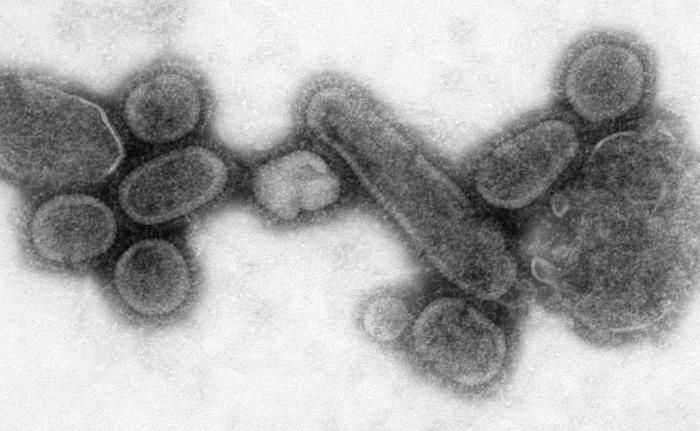 The first time single-celled organisms decided to switch to communism (i.e. stick together to become multi-cellular organisms like cabbages, hamsters and us), they immediately faced a compromise. Sure, sticking together meant more food and more safety, but reproduction was now a more complicated matter. And as life became more complex, reproduction just got slower and slower. And because the rate that we can evolve is strongly influenced by our reproduction rate, this means that the bacteria and other little blighters that like to infect us have a massive evolutionary edge. We measure the time it takes for organisms to reproduce in terms of generation times, the average time it takes between a new organism being born and it getting around to reproducing for itself. After millions of years of evolution, the differences between the generation times of single-celled organisms such as bacteria and us humans is massive. The average human takes some 25-30 years to reproduce. Bacteria can divide and then divide again in 20 minutes. And so, bacteria and viruses evolve at a simply astounding rate by comparison to us big old lumbering animal types. Although we’ve had immune systems since those earliest days of multi-cellular life, the mutation rate problem was still there. Our immune cells work by recognising patterns- bits of bacteria, the surfaces of viruses, maybe some of the proteins from a parasite. But what good is it having cells that see what’s on the outside of a bacterium when a bacterium can change its outfit a million times before your cells can get their pants on in the morning? Our immune cells had to work in terms of broad patterns, and if one of those patterns changed due to mutation, things invariably got ugly.
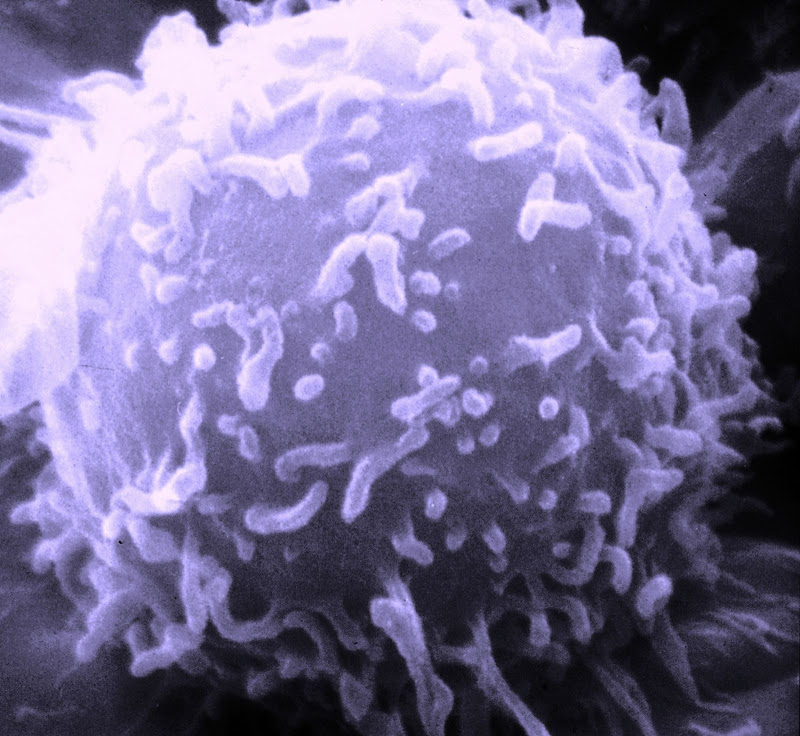 Of course, if that had been the end of the story, we wouldn’t be here to talk about it. There’d just be a load of bacteria hanging around wondering where all the easy food went. Evolution, in its elegant non-wisdom, provided a solution. The key was to fight fire with fire. We vertebrates evolved a special group of cells that, when first made by our bodies (and we make loads of them every day), undergo their own randomised mutations. These special mutations occur only within a set part of our genetic code- right in the part which recognises those nasty bugs and parasites. Just by allowing chaotic re-arrangements of that little part of our DNA in a select set of cells, we we’re suddenly back in the game. With enough of these cells, we can now recognise some 10e12 patterns (that’s one thousand billion). In effect, we harnessed the driving force of evolution itself. Tightly controlled chaos. And it worked. Every animal with a spine has those precious cells. The lymphocytes, also called T cells and B cells. They’re awesome really.
Flu virus image from the Centers for Disease Control and Prevention's Public Health Image Library (Public Domain). Lymphocyte image from the National Cancer Institute (Public Domain).
 The first time single-celled organisms decided to switch to communism (i.e. stick together to become multi-cellular organisms like cabbages, hamsters and us), they immediately faced a compromise. Sure, sticking together meant more food and more safety, but reproduction was now a more complicated matter. And as life became more complex, reproduction just got slower and slower. And because the rate that we can evolve is strongly influenced by our reproduction rate, this means that the bacteria and other little blighters that like to infect us have a massive evolutionary edge. We measure the time it takes for organisms to reproduce in terms of generation times, the average time it takes between a new organism being born and it getting around to reproducing for itself. After millions of years of evolution, the differences between the generation times of single-celled organisms such as bacteria and us humans is massive. The average human takes some 25-30 years to reproduce. Bacteria can divide and then divide again in 20 minutes. And so, bacteria and viruses evolve at a simply astounding rate by comparison to us big old lumbering animal types. Although we’ve had immune systems since those earliest days of multi-cellular life, the mutation rate problem was still there. Our immune cells work by recognising patterns- bits of bacteria, the surfaces of viruses, maybe some of the proteins from a parasite. But what good is it having cells that see what’s on the outside of a bacterium when a bacterium can change its outfit a million times before your cells can get their pants on in the morning? Our immune cells had to work in terms of broad patterns, and if one of those patterns changed due to mutation, things invariably got ugly.
 Of course, if that had been the end of the story, we wouldn’t be here to talk about it. There’d just be a load of bacteria hanging around wondering where all the easy food went. Evolution, in its elegant non-wisdom, provided a solution. The key was to fight fire with fire. We vertebrates evolved a special group of cells that, when first made by our bodies (and we make loads of them every day), undergo their own randomised mutations. These special mutations occur only within a set part of our genetic code- right in the part which recognises those nasty bugs and parasites. Just by allowing chaotic re-arrangements of that little part of our DNA in a select set of cells, we we’re suddenly back in the game. With enough of these cells, we can now recognise some 10e12 patterns (that’s one thousand billion). In effect, we harnessed the driving force of evolution itself. Tightly controlled chaos. And it worked. Every animal with a spine has those precious cells. The lymphocytes, also called T cells and B cells. They’re awesome really.
Flu virus image from the Centers for Disease Control and Prevention's Public Health Image Library (Public Domain). Lymphocyte image from the National Cancer Institute (Public Domain).


 Posts
Posts


